← Agricultural Marketing Guide

Agricultural Communications: How Agribusiness Companies Build Reputation, Reach and Commercial Results

Agricultural communications encompasses all channels through which farming, agribusiness and agri-tech companies communicate with their audiences – from trade media PR and social media to performance marketing, recruitment communications, crisis management and digital content. Effective agricultural communications combines strategic planning with sector-specific knowledge: the seasonal rhythms, technical vocabulary and audience psychology that only specialists understand.

Agricultural communications is more than press releases and newsletter posts. It is the systematic management of how your company is perceived by customers, potential employees, media, policymakers and the public. LAEND integrates every communications channel – because your reputation is built or lost across all of them simultaneously.

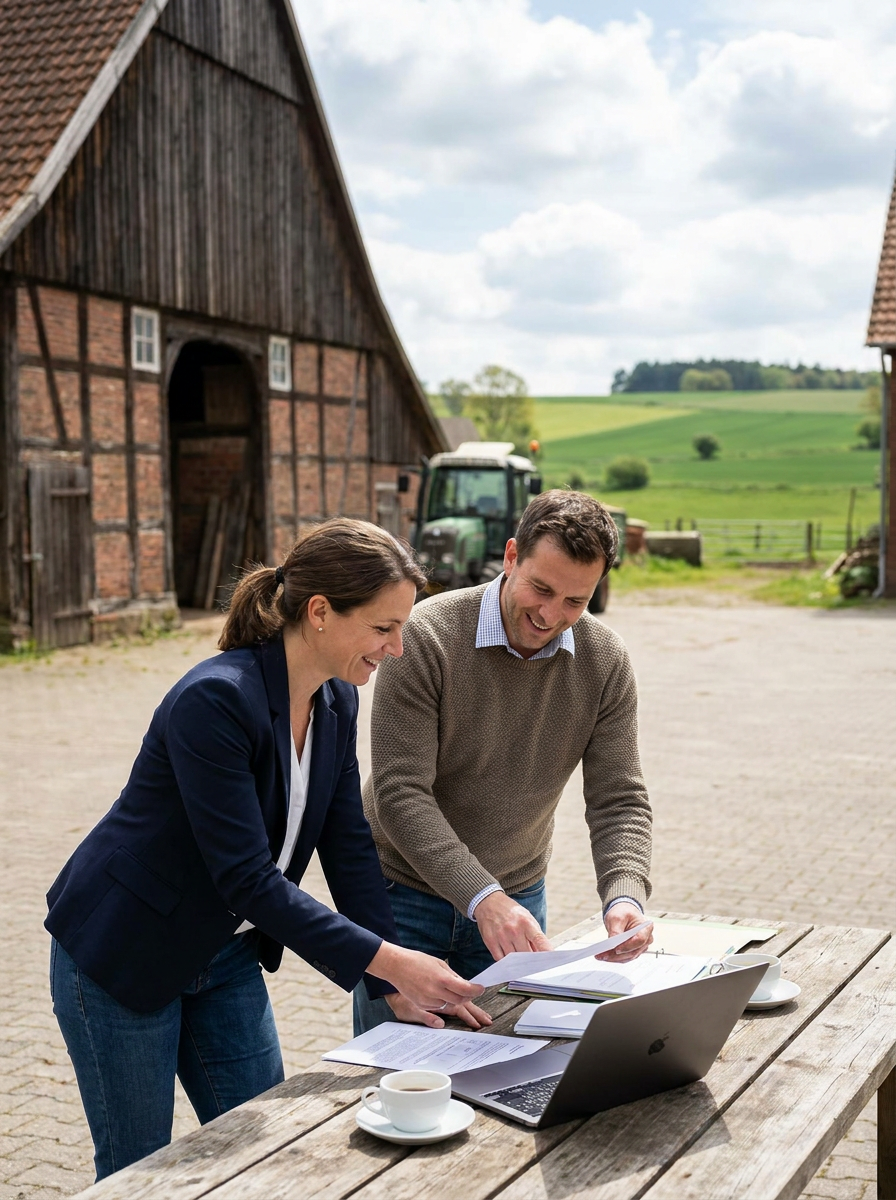
LAEND Team bespricht Agrarkommunikation-Strategie auf dem Bauernhof

What Is Agricultural Communications?

Agricultural communications refers to all communication measures by companies, organisations and businesses in agriculture and agribusiness. This includes external communication (with customers, media and society) and internal communication (employees and applicants). The goal is trust, visibility and measurable results.

Agricultural communications is broader than traditional marketing. It encompasses everything an agricultural machinery company, livestock housing manufacturer, agri-tech provider or crop protection manufacturer communicates externally and internally: advertising, PR, social media, content, recruiting campaigns, crisis communication, trade fair appearances and website. All of this together shapes the image that target groups have of a company.

The crucial difference from general corporate communication: in the agricultural sector, there are specific target groups (farmers, machinery dealers, livestock housing manufacturers, agricultural technologists), a distinctly seasonal communication logic (field season, harvest, trade fair calendar) and an industry facing societal pressure. Those who don't understand these realities will miss their target audience.


Why Agribusiness Companies Need Specialist Communications Support

Agriculture is under more societal pressure than almost any other industry. At the same time, there's a shortage of skilled workers, competition is increasing, and purchasing decisions are becoming more informed. Those who don't communicate lose out – on customers, applicants, and societal acceptance.

Trust is the Currency of the Agricultural Sector

Purchasing decisions for agricultural machinery, stable technology, or crop protection products are not made impulsively. They are based on trust built over months and years. Professional communication is the foundation of this trust.

Societal Pressure Requires Active Communication

Animal husbandry, crop protection, land use – agriculture is a subject of public debate. Companies that don't communicate actively allow others to control the narrative. Proactive agricultural communication protects reputation.

Recruiting is a Communication Task

The shortage of skilled workers in agriculture is real. To attract good employees, you need to be visible as an attractive employer – that's communication, long before anyone advertises a job.

Digital Visibility is Crucial for Business Success

70% of agribusiness decision-makers research online before making purchasing decisions. If you're not visible on Google, LinkedIn, and Instagram, you don't exist for this target group.

The 5 Channels of Effective Agricultural Communications

Not every channel suits every business. This overview shows which channels are truly relevant for agribusiness companies – and what they specifically achieve.

01

Performance Marketing (Meta Ads & Google Ads)

The most direct path to measurable results. Facebook and Instagram ads precisely reach farmers, machinery dealers, and agricultural technologists in their catchment area. Google Ads capture purchase-ready search queries. Both channels deliver leads, applications, or website visits – with a traceable return on investment.

→ More: Meta Ads for Agriculture

02

Content Marketing & SEO

Long-term visibility through content that answers target audience questions. Blog articles, guides, explainer videos, and a structured website architecture ensure that agribusiness companies are found on Google – 24 hours a day, without an ongoing advertising budget.

→ More: SEO for Agriculture

03

Social Media Communication

Instagram, Facebook, and LinkedIn are the most important social media channels for agribusiness. Instagram and Facebook emotionally engage farmers and commercial target groups; LinkedIn is suitable for B2B decision-makers, trade journalists, and industry networks. Authentic content from the farm performs better with this target group than any professional studio advertising.

04

PR & Trade Press

Agrarheute, top agrar, dlz, agrarzeitung – being mentioned in these media outlets builds credibility that no paid advertisement can buy. Press releases, guest articles, and editorial visits are indispensable for the long-term positioning of an agribusiness company.

05

Recruiting Communication

Employer branding, employee videos, WhatsApp campaigns, and targeted social recruiting ads – recruiting is now its own communication discipline. To find skilled professionals, employers must communicate just as professionally as they would as sellers.

→ More: Recruiting in Agriculture

Internal vs External Agricultural Communications

Agricultural communications has two directions – external (customers, media, society) and internal (employees, applicants). Both are equally important and influence each other: those who communicate poorly internally will face issues with external credibility.

External Agricultural Communication

Target Groups: Customers (Farmers, Buyers), Potential Customers, Media, Consumers, Society, Politics.

Measures: Advertising (Meta Ads, Google Ads), PR (Trade Press, Press Releases), Social Media, Website, Trade Fairs, Events, Crisis Communication.

Goal: Visibility, trust, leads, revenue, social acceptance.

Internal Agricultural Communication

Target Audiences: Existing employees, potential applicants, apprentices.

Measures: Employer branding, recruitment campaigns, employee videos, internal newsletters, onboarding communication.

Goal: Employee retention, talent acquisition, projecting company culture externally.

LAEND Approach: We integrate internal and external communication. A strong employer brand is simultaneously the strongest external reputation. Employees who are proud of their company are the most credible brand ambassadors.

Crisis Communications for Agribusiness

No agribusiness company is immune to crises: a viral video with animal welfare allegations, a product recall, a workplace accident, or an environmental controversy. Anyone who then lacks a communication strategy loses control of the narrative – and with it, customers, employees, and reputation.

Social Media Shitstorm

A critical video on TikTok or Instagram spreads within hours. Without a quick, credible response, the situation escalates. Professional crisis communication means: responding with a clear statement within 2–4 hours, not remaining silent.

Animal Welfare Allegations

Barn technology and animal health companies are particularly vulnerable. Proactive transparency – farm open days, documentation, authentic content – is the best crisis prevention.

Product Recall or Quality Allegations

Fast, transparent communication with trade partners, media, and end customers is crucial. Anyone who tries to conceal a recall harms the brand more in the long run than the original incident.

Skilled Labour Shortage as a Communication Crisis

When a company becomes publicly known as a "bad employer," that's a crisis. Employer branding is crisis prevention.

LAEND Principle for Crisis Communication: Better proactive than reactive. Those who communicate authentically and continuously build up a trust reserve that cushions mistakes in a crisis. Those who only communicate when things are dire lack credibility.

What Does Agricultural Communications Cost?

Agricultural communications is not a one-size-fits-all product. Costs depend heavily on the channels used and the goals to be achieved. Here's a guide:

Strategy Consulting & Communication Concept: €2,000–€8,000 one-time fee

Situation analysis, goal definition, channel selection, messaging strategy, editorial plan. The foundation for all subsequent actions.

Ongoing Communication Support (Retainer): €1,500–€6,000 / month

Continuous management of all channels: Social Media, Content, PR Coordination, Performance Marketing. Depending on scope and number of channels.

Campaigns (one-off): €3,000–€15,000

For specific goals: product launch, trade fair communication, recruiting campaign, crisis communication. Production + Distribution + Tracking.

Video & Photo Production: €1,500–€8,000

Authentic content from the farm. LAEND advantage: own farm as a production location reduces costs and increases authenticity.

Rule of thumb: agribusiness companies that take professional agricultural communications seriously invest 2–5% of their annual revenue in communications. With €5 million in revenue, that's €100,000–€250,000 per year – allocated to agency fees, media budget and production.

→ All Cost Items in Detail

5 Agricultural Communications Mistakes to Avoid

01

Only Communicating When There's an Occasion

A press release for a product launch, a post about a trade fair, a job advertisement when a position opens up – reactive communication doesn't build a relationship with the target audience. Professional agricultural communication is continuous, not event-driven.

02

Speaking the Wrong Language

"Innovative sustainable agricultural solutions for the future of food" – no one who has ever been on a farm talks like that. Farmers and agribusiness decision-makers immediately recognize when someone doesn't know the industry. Technical language, seasonality, and machinery logic are fundamental requirements.

03

Stock Photos Instead of Authentic Content

Happy farming families in wheat fields, tractors from behind at sunset – these images are ubiquitous. Authentic content from a real farm, with real people and real machinery, converts many times better with this target audience.

04

No Crisis Plan

70% of agribusiness companies lack a defined crisis communication process. When a critical video goes viral or a scandal breaks, it's too late to develop a plan. Crisis communication must be prepared in advance.

05

Separating communication and marketing

PR without performance marketing dissipates into reach without impact. Performance marketing without a communication strategy burns through budget without building trust. Only when both are considered together does sustainable impact emerge.

How LAEND Delivers Agricultural Communications

LAEND is neither a classic PR agency nor a pure performance agency. We are the interface: strategic communication that becomes measurable. Our advantage is structural – we have farmers on our team, our own farm, and over 50 agribusiness references.

01

Communication Strategy

Analysis, goal definition, channel strategy, messaging architecture. No one-size-fits-all solutions, but a concept that fits your specific market, target audience, and goals.

02

Performance-driven Communication

Every communication measure is tracked and optimised. No "we think that was good" – but CPL, reach, engagement rate, conversion rate. Communication that pays off.

03

On-farm Content Production

Our farm in Wriedel is our production site. Real field footage, real machine scenes, a real team – no stock photo communication, but content that builds trust.

04

Integrated Campaigns

From strategy to production, distribution and optimisation – LAEND handles the entire communication process. No interface problems between different agencies.

Agricultural communications that earns attention and builds trust.

In a free consultation, we assess your current communications and identify which changes would have the greatest impact on your reputation and commercial results.

Frequently Asked Questions About Agricultural Communications

What is the difference between agricultural communications and agricultural marketing?

Agricultural marketing is the broader commercial function covering all activities to sell products and services. Agricultural communications is the specialism that manages reputation, media relationships, stakeholder engagement and message consistency. LAEND integrates both disciplines.

Does LAEND work with agribusiness companies outside Germany?

Yes. We have delivered communications and campaign work for clients in Sweden, Argentina and across the DACH region. English is our working language for international projects.

What does an agricultural communications retainer cost?

Retainers typically range from €2,000–€6,000 per month depending on scope and channel mix. Project-based work is also available for specific campaigns, events or crisis situations.

How quickly do agricultural communications campaigns deliver results?

Performance marketing channels (Meta Ads, Google Ads) deliver measurable results within 2–4 weeks. PR and reputation building require a 3–6 month horizon. SEO is a 6–12 month investment. We recommend integrating all three for sustained impact.

Can LAEND handle communications for agribusiness companies across multiple European markets?

Yes. Our team is fluent in German and English, and we have partner networks in Scandinavia, the Netherlands and southern Europe. We have experience managing campaigns simultaneously across multiple DACH countries and international markets.